01 · LOCAL
CM Core
Reservations, prices, occupancy, rules and the operational calendar remain the local source of truth.
CM Free, Plus and PRO remain independent systems. An open Bridge Protocol already connects them to a mobile Companion, and an optional Connector can voluntarily bring an installation into a shared layer for OTA connectivity, Community, sharing and future AI queries.
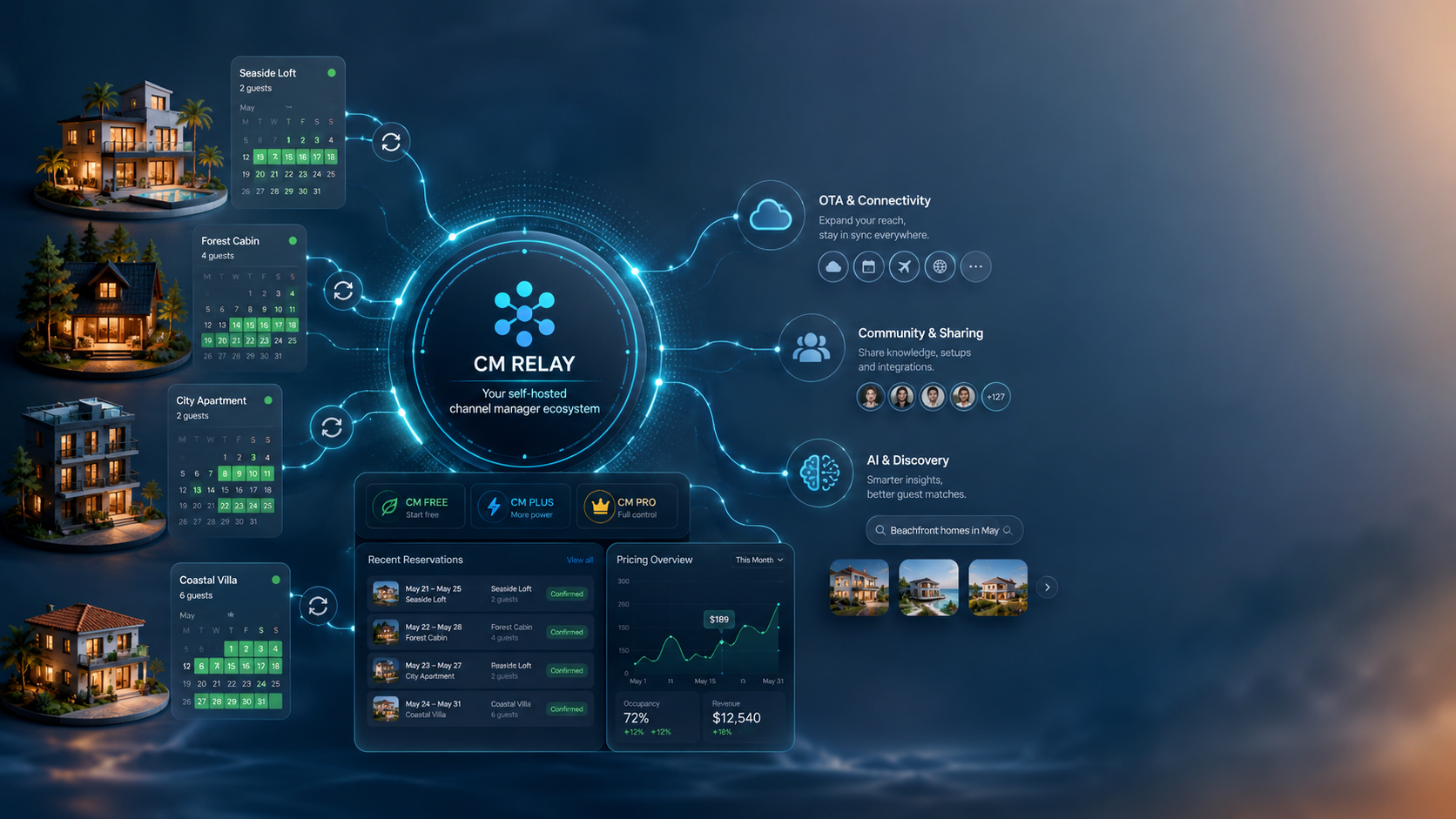
CM Ecosystem does not replace the local CM. It adds clearly separated, optional layers around it. The user decides on each of them consciously.
Reservations, prices, occupancy, rules and the operational calendar remain the local source of truth.
A documented, scoped interface between a CM installation and external clients — no access to internal files.
An open-source Android client built on the Bridge Protocol. Already working today, release 0.3.5.
An optional bridge from Free, Plus or PRO into the wider ecosystem. No hidden telemetry, no mandatory phone-home.
A central, open-source transport layer for OTA adapters, registry, entitlements, health and future shared services — live today.
A voluntary network of properties for discovery, referrals, sharing and AI-assisted search.
The thumbnail shows the major areas of the system. Open the SVG and zoom into the detail: public/admin flow, CM Core, modules, Relay, external systems, and the primary and fallback paths.
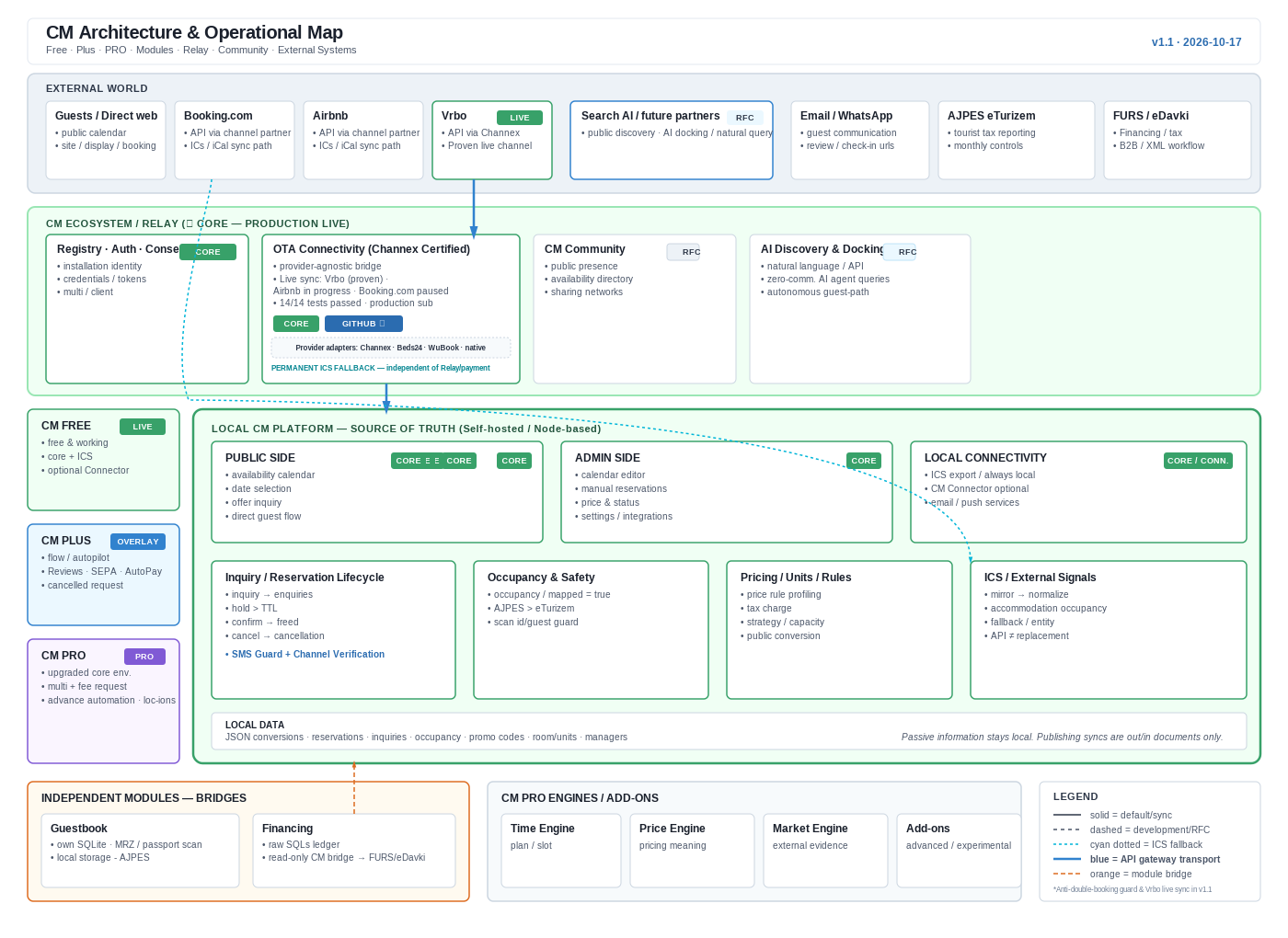
CM Bridge Protocol v1 is a documented, scoped interface between a CM installation and external clients. It was built so CM Companion could talk to CM without ever directly accessing internal files or private administrative APIs.
CM Companion is the first reference client for the Bridge Protocol, not a private exception to it. If another client needs a capability the Bridge doesn't yet expose, the right fix is to extend the documented scope on the CM side — never a hidden Companion-only shortcut.
External client
      │
     HTTPS
      │
      ▼
CM Bridge Protocol v1
      │
      ▼
Local CM installation
Android Companion
        │
      HTTPS
        │
        ▼
CM Bridge Protocol v1
        │
        ▼
CM Free / Plus / PRO
CM Companion is an open-source Android client for CM Free, Plus and PRO. No central account or cloud middleman required — the owner pairs the phone directly with a CM installation using a one-time pairing exchange, producing a device token tied to that device and installation. The same phone can dock with multiple independent CM installations.
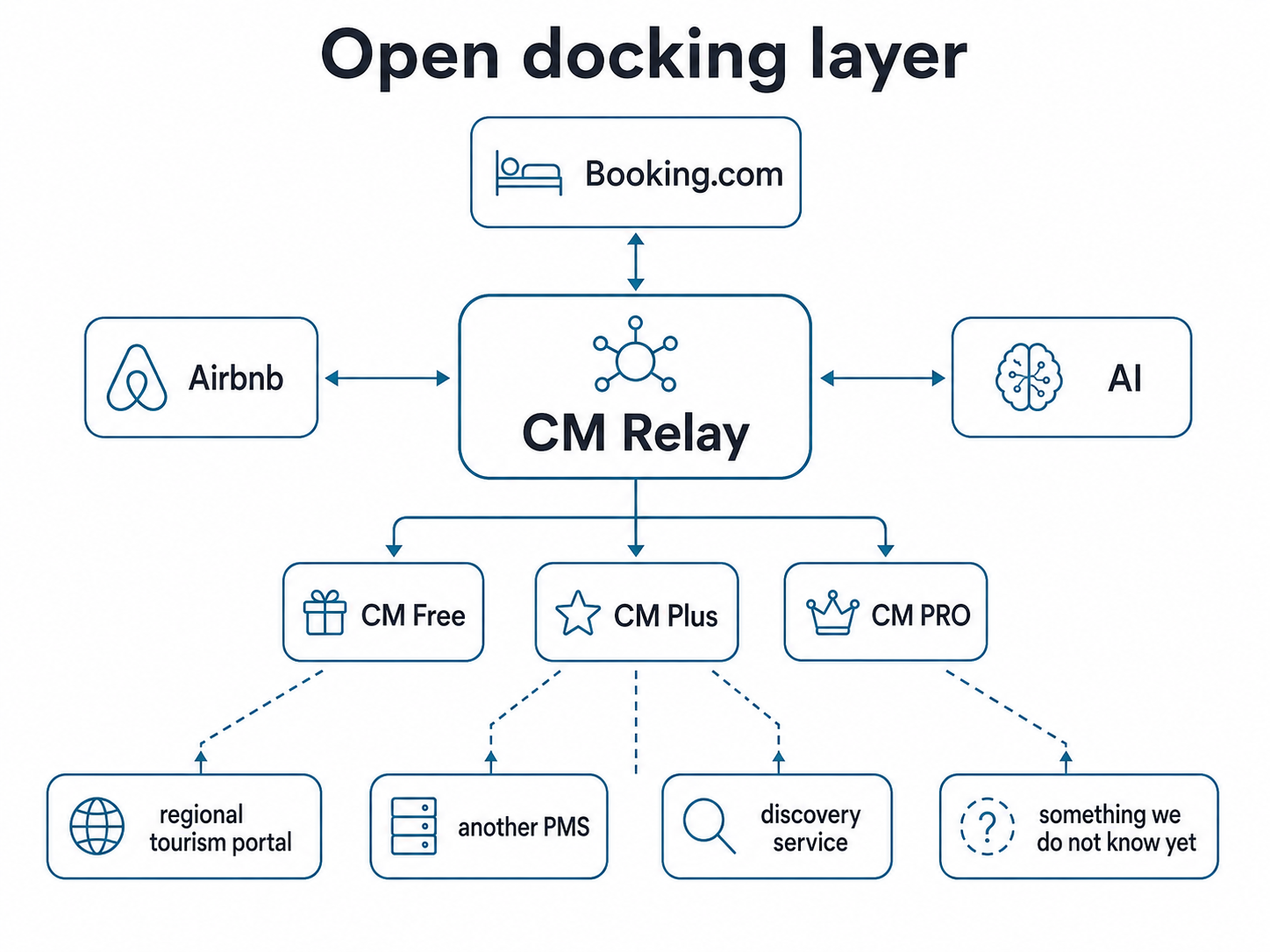
Relay is provider-agnostic. Today the upstream can be Channex, Beds24 or WuBook; tomorrow it can be a direct Booking or Airbnb adapter. The local CM always speaks the same CM Connector protocol.
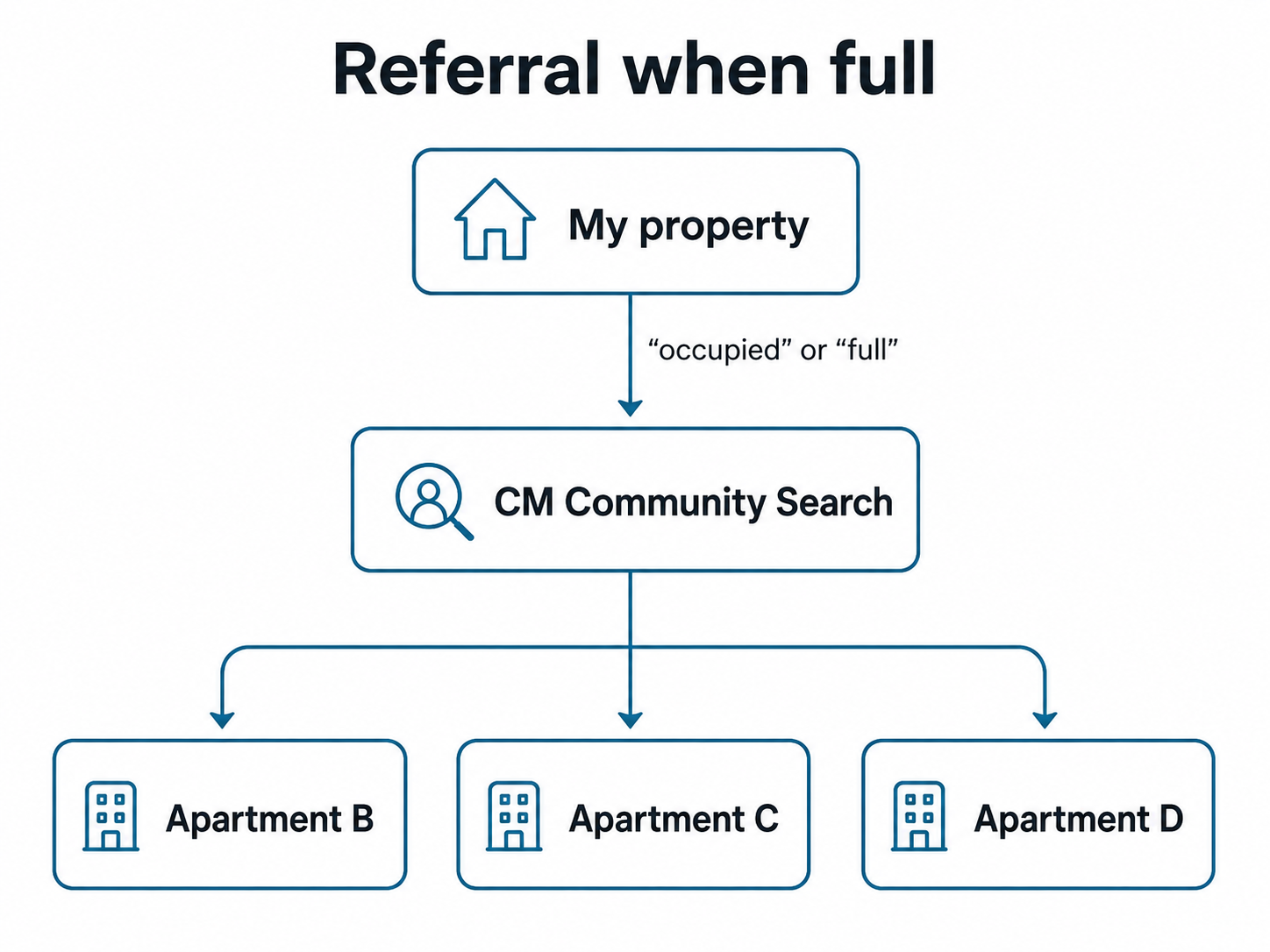
CM Community is envisioned as a voluntary network of independent properties. A member can share only selected public data: location, capacity, availability projection, public price or a direct booking link.
The result isn't a new OTA. It can be a simple referral: show a guest you can't host a free property from another Community member.
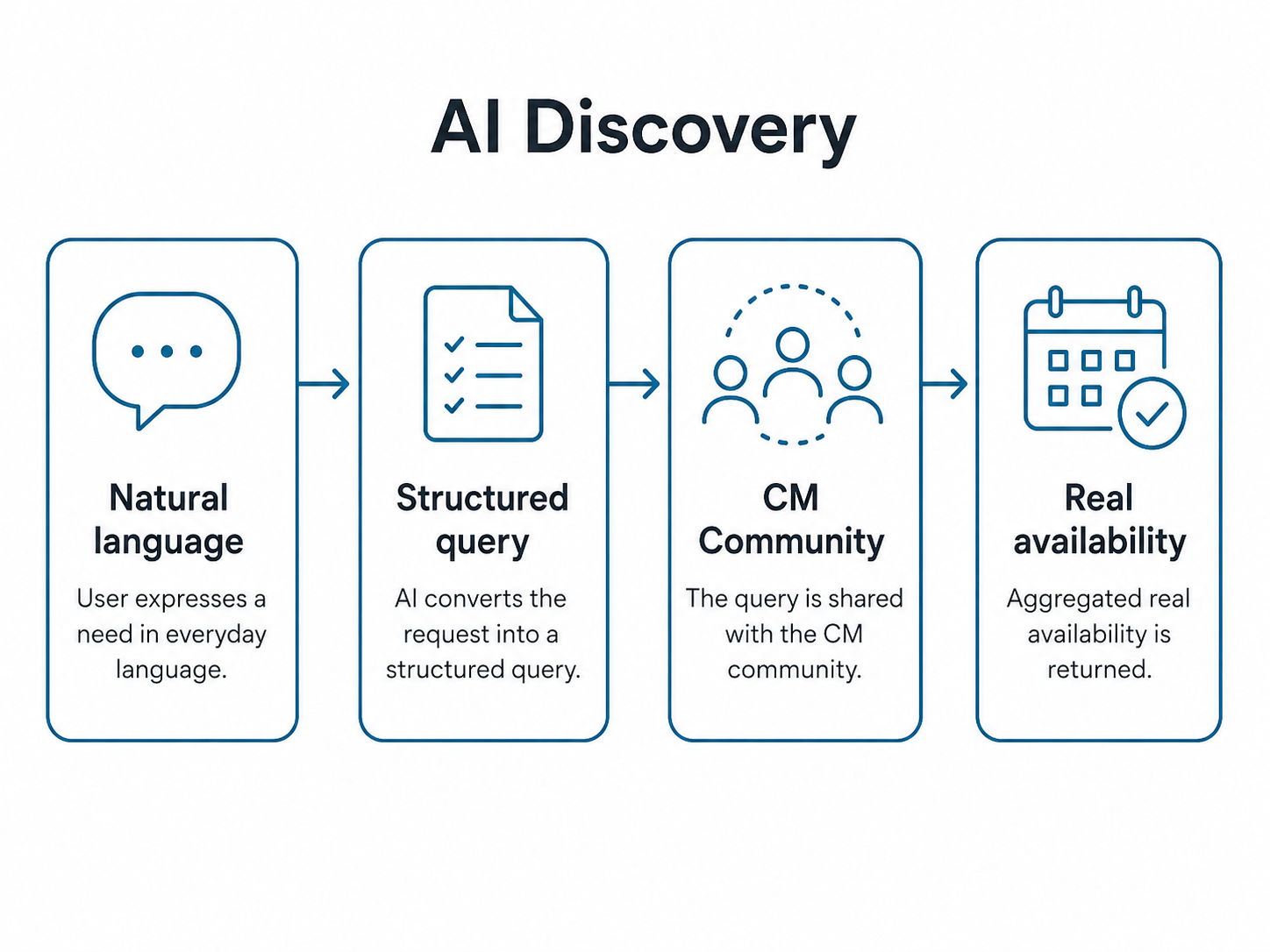
"I'm looking for an apartment for four near Bled, with parking and EV charging." AI can turn that sentence into a structured query, but availability, price and booking conditions come from real CM data.
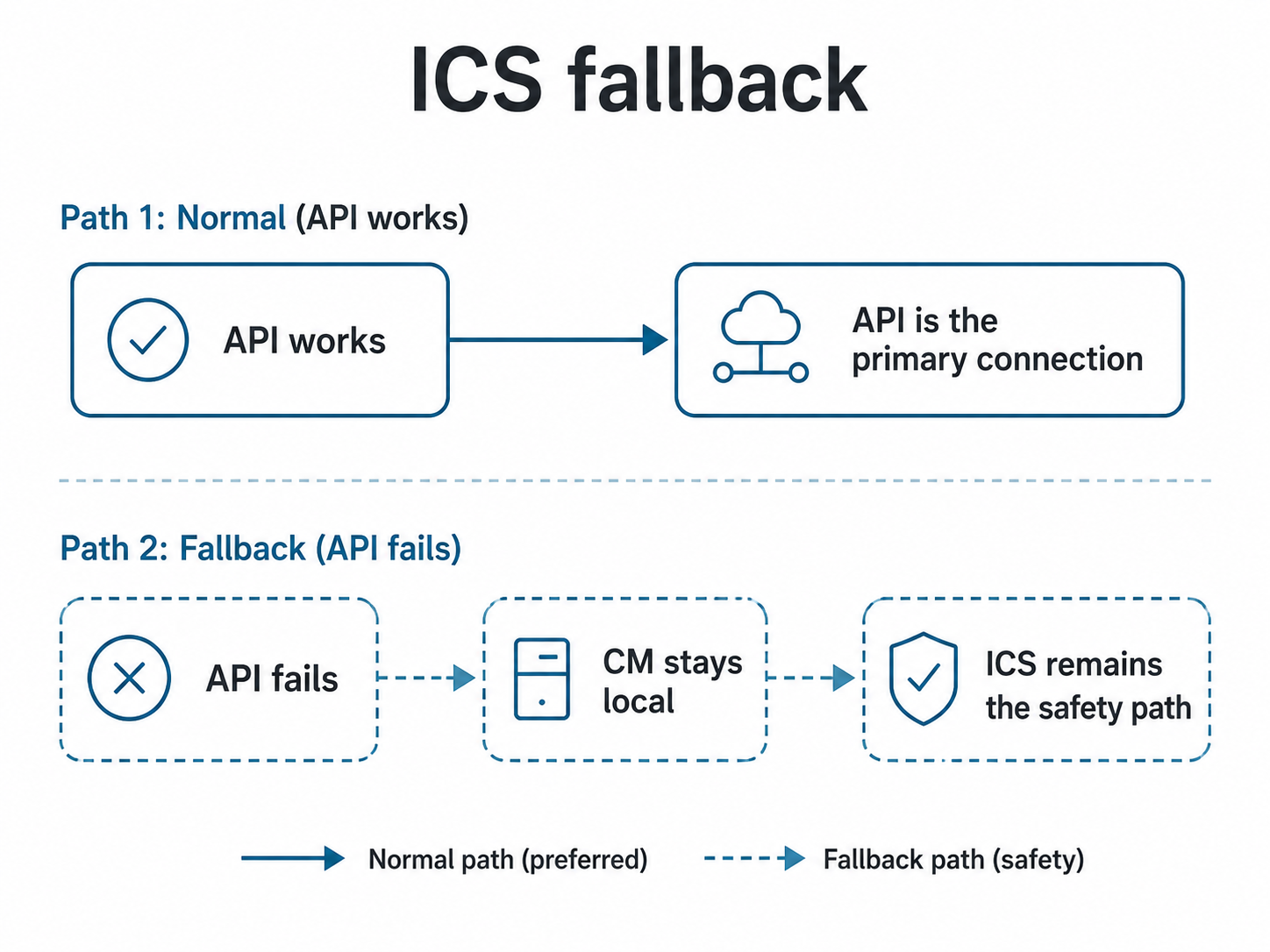
A local ICS/iCal fallback remains in every edition. If an API provider, Relay or a paid service fails or isn't paid, the local CM keeps working.
ICS has no functional parity with a full API, but it stays the safety path for basic calendar and reservation-block continuity.
The resulting architecture can be viewed as several independent but compatible paths around the same local core.
                         CM ECOSYSTEM
                              │
             ┌────────────────┼────────────────┐
             │                │                │
       CM Bridge          CM Connector      Community
             │                │                │
             ▼                ▼                │
       CM Companion        CM Relay ◄──────────┘
             │                │
             │                ├── OTA
             │                └── future services
             │
             ▼
        Local CM Core
       Free / Plus / PRO
CM Free remains independent, publicly available and usable without a central account. The Connector is an option, not a requirement. Only after a clear opt-in consent does an installation become part of the CM Service or Community.
A Relay outage or non-payment of the central service doesn't turn off the calendar, reservations or the local ICS.
The Free distribution doesn't register an installation centrally until the user activates the Connector themselves.
Connectivity, Community, referrals and AI discovery can be separate capabilities and separate decisions.
CM Free remains the promotional and reference core through which the wider ecosystem can emerge.
A working, live-tested mobile client (Android, v0.3.5) on a documented, scoped Bridge interface.
A working Channel Manager concept, public/admin flow, a local source of truth, and the ICS foundation.
Channex PMS certification passed, running real production OTA traffic (live Vrbo sync, channel-presence confirmation gate). Now open source.
A publicly described architectural direction. Deliberately open for future partners, other PMS systems and new docking points.
CM Ecosystem is a project in progress. The core principle stays simple: local independence, clear consent, replaceable adapters, and an open door for something we don't know yet.